Introduction
I’ve wanted to try a TPT for a long time, so this is a dream review for me. My first LAB was a steel shaft, my current is a custom DF3 armlock with Accra. I’ve had great experiences with LAB since I moved to the dark side, or the should I say lie angle balanced side. I came second in club Champs with my first LAB last November and won monthly medal in February.
My other hobbies are kitesurfing, surfing, and photography, and I play drums (due to my lack of vocal talents) with my family, who all play musical instruments. I also volunteer for the Emergency Services. Outside of main cities in Australia, volunteer emergency services do storm repair, steep inclined and road crash rescue.
My gear – what’s in the bag
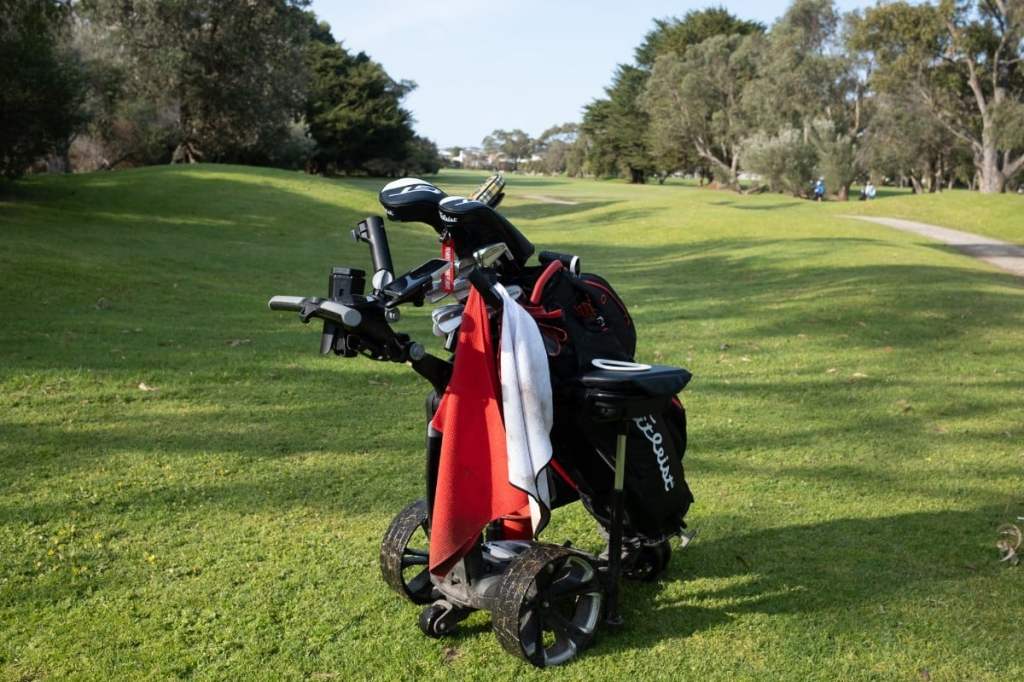
- LAB DF3 Armlock
- Titleist GT 10 Degree and 3.5 Fairway Wood
- Titleist T200 2 Iron and 4 Iron
- Titleist T150 5-PW
- Vokey 48, 54, 60
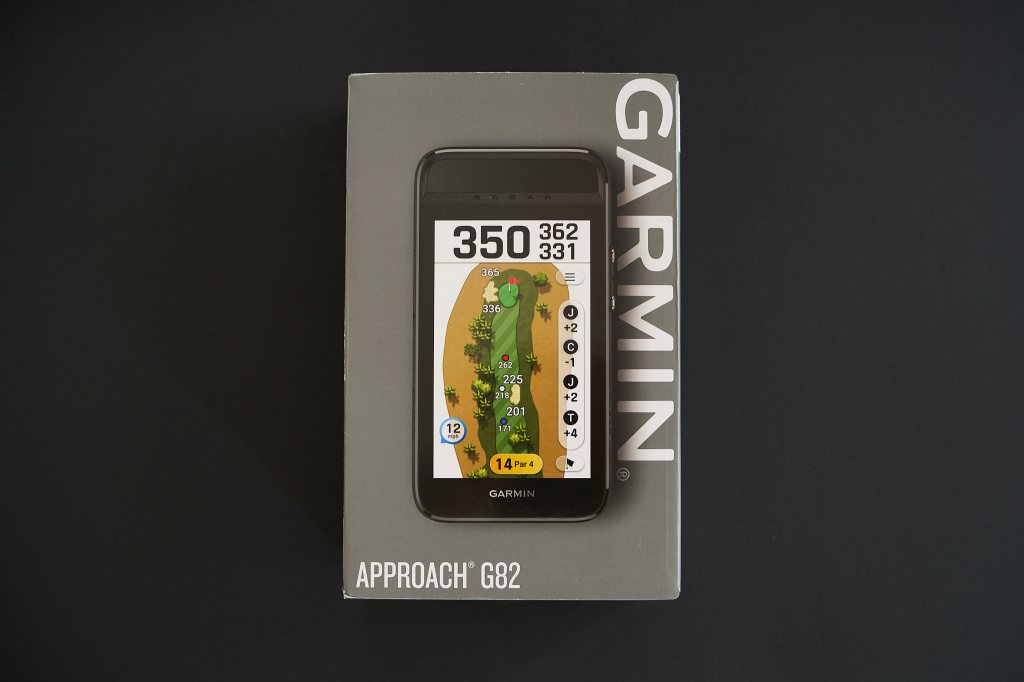
- Garmin Z30 Rangefinder
- Chromesoft Triple Track 360

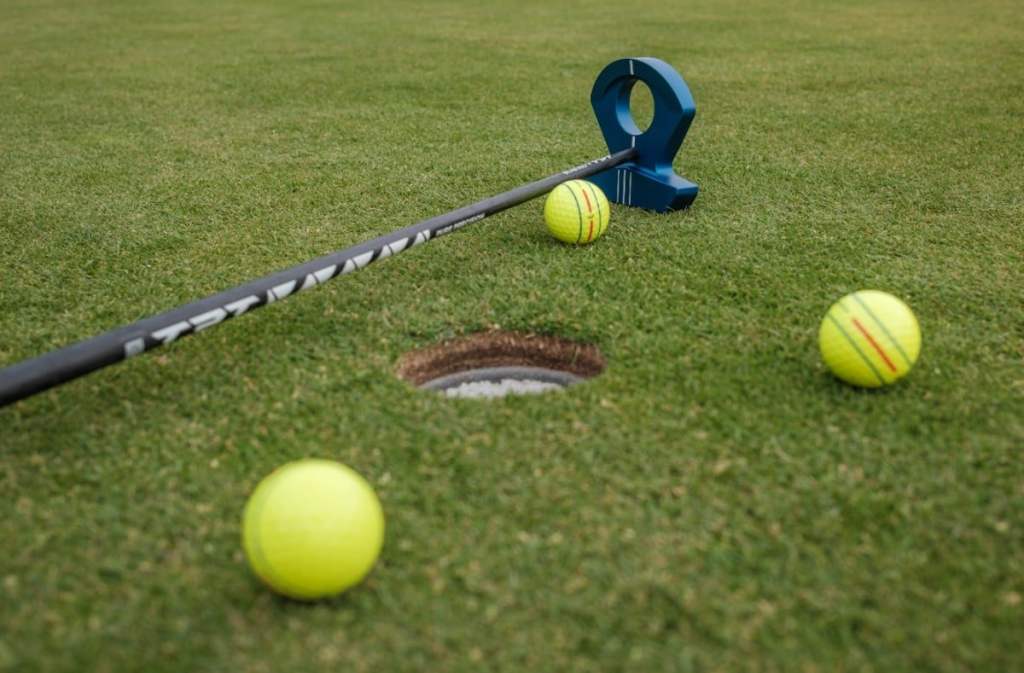
I’m using Callaway Chrome Soft Triple Track 360 balls as I like the triple track alignment with the LAB DF3 SS alignment configuration.
My golf
I’m currently an 8 handicap, shooting occasional sub-80s, which should improve as we go into summer. I got back into golf three years back when I moved to Phillip Island and had a beautiful course on my doorstep. From a putting perspective, I have been improving over the last 12 months, both in part due to the LAB and taking on Aimpoint to help with reading breaks. I’m currently running between 28-32 putts a round. Today I had 29 putts when I shot a 76.
I’m a little like Bryson DeChambeau, minus any skill, talent or strength. I’m a golf nerd, which is what got me looking at the LAB putters. I liked what they were trying to achieve and how they were challenging the way other manufacturers were thinking.
My course
Our local course is Philip Island Golf Course, an 18-hole par 72 holiday destination course less than a mile from my house. Wildlife on our courses is amazing, with plenty of birdlife, wallabies, snakes, and cottontail bunnies. Wallabies are really small equivalents of Kangaroos.
My tests /Questions
Some of the questions I’d like to answer as part of the test:
- How does the weight of the putter compare to Accra?
- Does the TPT feel noticeably different to the Accra, and if so, in what way?
- Does the TPT improve accuracy over the Accra for the average non-professional golfer?
- How does the quality compare between Accra and TPT?
- Is the TPT shaft worth the $ premium?
What I’ll be testing
I’ll be testing a LAB DF3 Armlock with a 5-degree loft against my DF3 with an Accra shaft. I decided to try a blue DF3 head with the TPT to see the difference.
First Impressions (10/10)
First impression on the LAB TPT in one word: Amazing
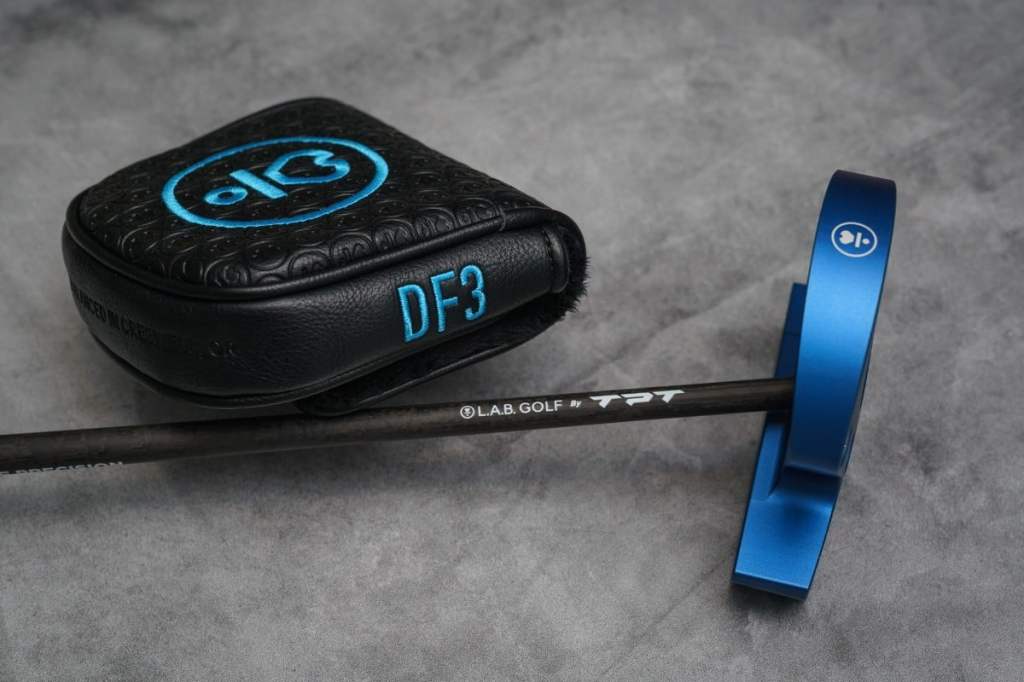
Built and shipped to my door more than 8000 miles away in less than a week was an impressive start to the review. You can see a longer post about it in the thread, but in short, if you want your putter quickly, use the LAB expedited option, it’s worth it.
After receiving that sort of experience with the ordering and shipping experience, I had a fair idea I wasn’t going to be disappointed.
Some noticeable differences compared to my Accra version
- The TPT shaft has a much smoother feel compared to the Accra. TPT is closer to a conventional graphite iron or driver shaft.
- The TPT shaft feels more rigid in the hand. Not sure if this is just psychological, but it feels different. I have an armlock so the length may make it more noticeable.
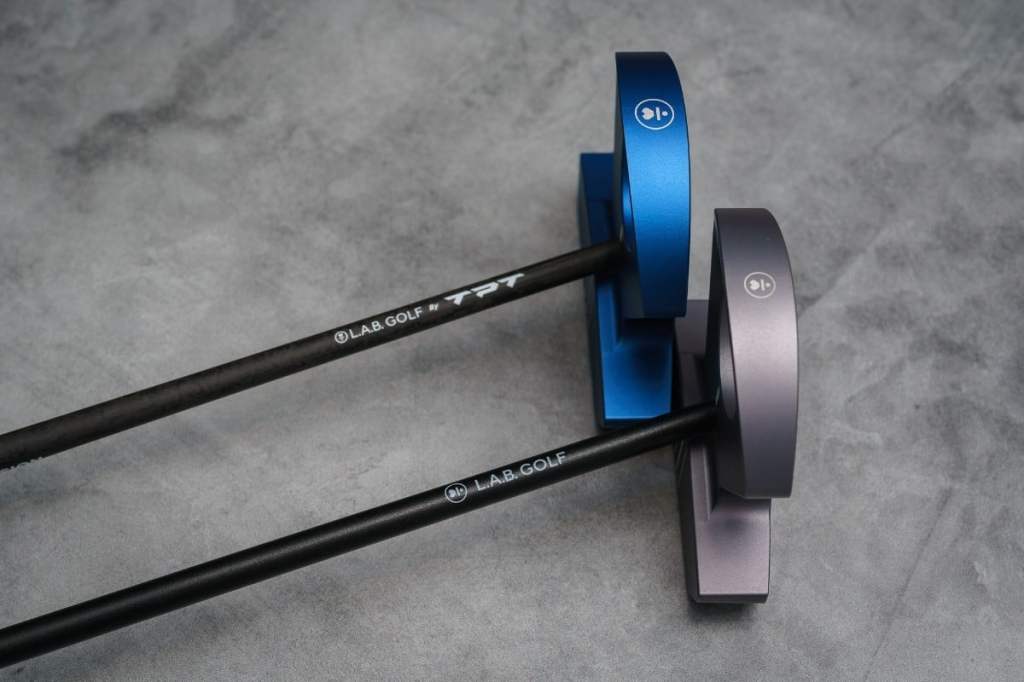
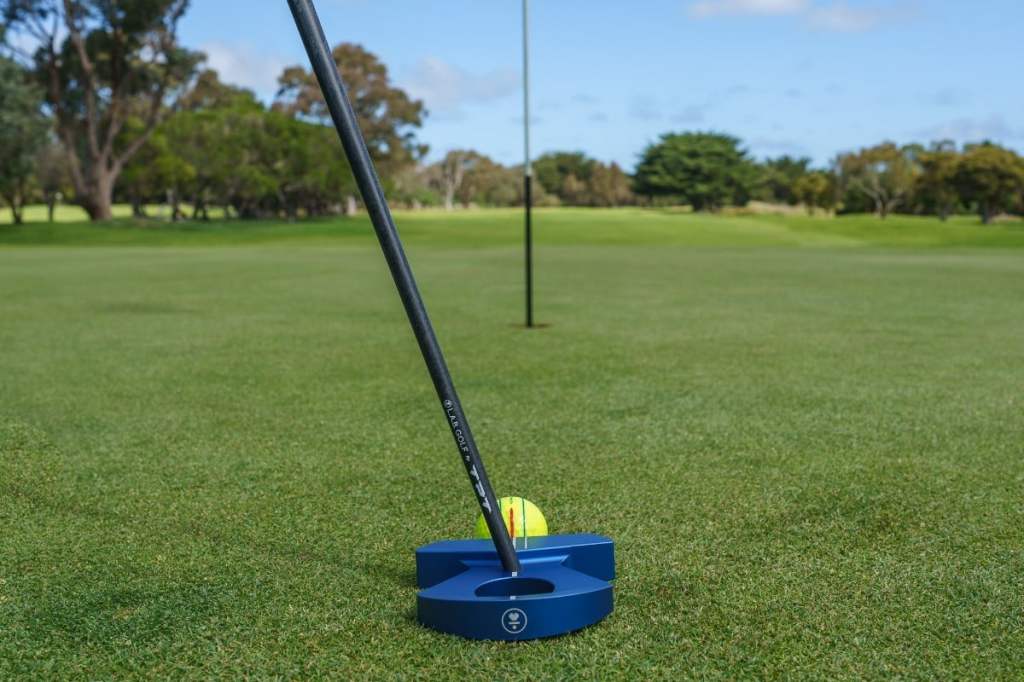
- The blue head looks amazing compared to the silver. I wasn’t sure how it would turn out, but I’m really glad I went with the blue and would highly recommend it.
- The alignment markings are much clearer on the blue head than on the silver. It’s something I didn’t think about, but for those looking at head colours, the darker options are better.

On the putting mat, the difference becomes a little more distinct. The TPT feels more rigid, while the Accra feels slightly softer off the face.
I tried to find areas to penalise the putter from a first impressions perspective, but I honestly couldn’t find anything. You have a custom putter, built to spec, delivered 8000 miles away in less than 7 days, and it’s perfect from a construction perspective. I’m not sure where I can penalise it.
Overall, I’m looking forward to getting through this test because I think it’s going to be fun.
Aesthetics (9.5 out of 10)
It’s a customised club, with your choice of head in the specific colour, ball alignment mark, shaft type, shaft length, grip and lie angle with a free online fitting to your personal swing. I’m not aware of any manufacturer that offers this level of customisation. And the blue coating on the DF3 looks beautiful.

If the DF3 putter isn’t your thing, there are more than a few other options that may appeal more, including a more conventional blade style shape.
The build quality on the DF3 is outstanding and it’s really hard to fault LAB on anything. Due to the review and the cost of the shafts, I checked over a little more intensely than I normally would, and I could find any manufacturing errors.
Given this review is focussed on the shafts, I’ll cover a little comparison. Compared to the construction on the Accra, the TPT has a smoother feel similar to a good quality driver shaft. The Accra has a different feel, it’s textured on the surface, almost like a non-slip surface texture.

The Accra doesn’t feel cheap at all. It’s clearly a premium with a premium feel. The Accra does, however, feel a little more durable than the TPT although thankfully I haven’t found this out from experience.
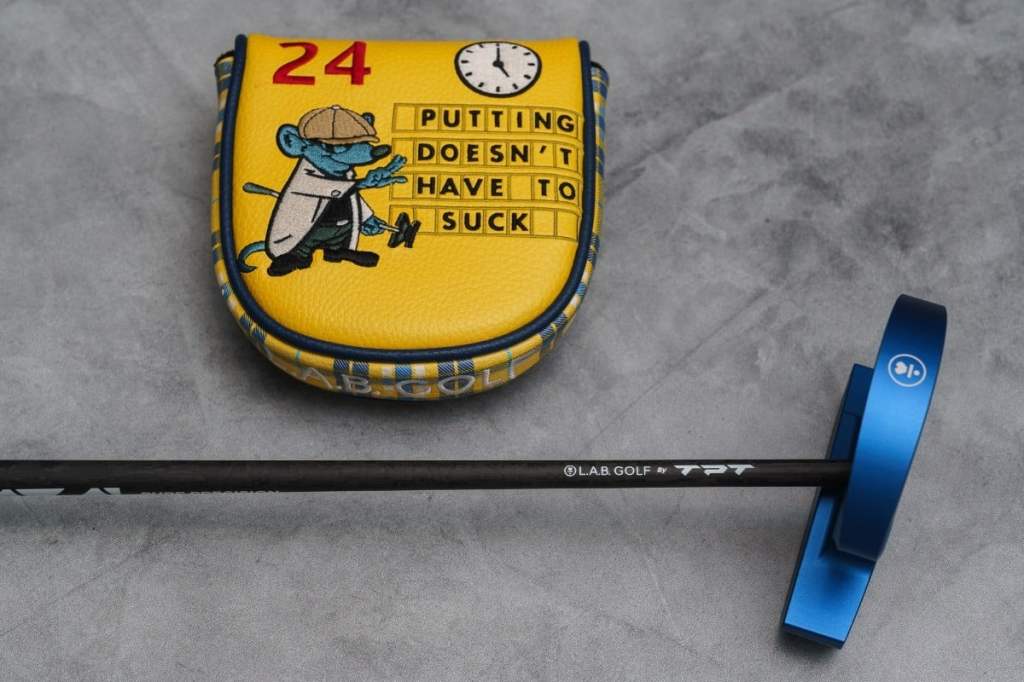
When I got my original Mezz Max, I complained about the quality of the headcover and the lack of headcover options, but the default headcover for the DF3 has changed completely and is now much higher quality and more in line with what I would expect from a putter like this. There are also a myriad of additional options available from LAB and third parties.
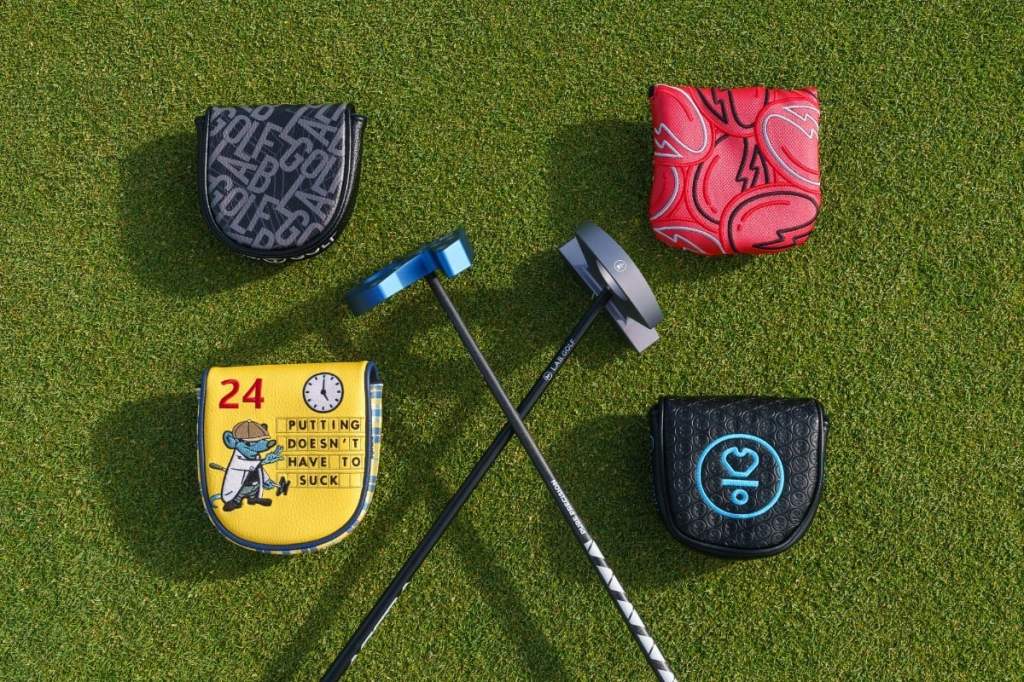
Given LAB have broadened their range of headcovers, I think they should create a TPT specific headcover, reserved for TPT buyers. The TPT shaft is a shaft limited to only LAB putters, and the shaft is hidden in the bag, so how about some TPT love with a specific LAB head cover for those who have invested the extra money in buying the TPT? It’s not about showing off, it’s about recognising the partnership that exists between TPT and LAB putters.
The Numbers (17 out of 20)
When it comes to the numbers, it’s an interesting outcome and not what I expected. Maybe my expectations of what a putter shaft could do was wrong, maybe the reality is that there is a limited amount of torque in a putter shaft due to the clubhead speed.
I will say that I only realised later that my numbers probably weren’t as high as they should be (both putters) for a few reasons:
- Sam Puttlab doesn’t seem to be setup for Armlocks so the forward shaft lean of the armlock results in lower scores as it sees the putter putting negative loft
- I didn’t realise that you need to keep distance 100% consistent. I was aiming for the hole but I adjusted strength through the test. The guy might have mentioned it to me, and I probably wasn’t listening. I’m planning a third test so I’ll see how I can improve on these.
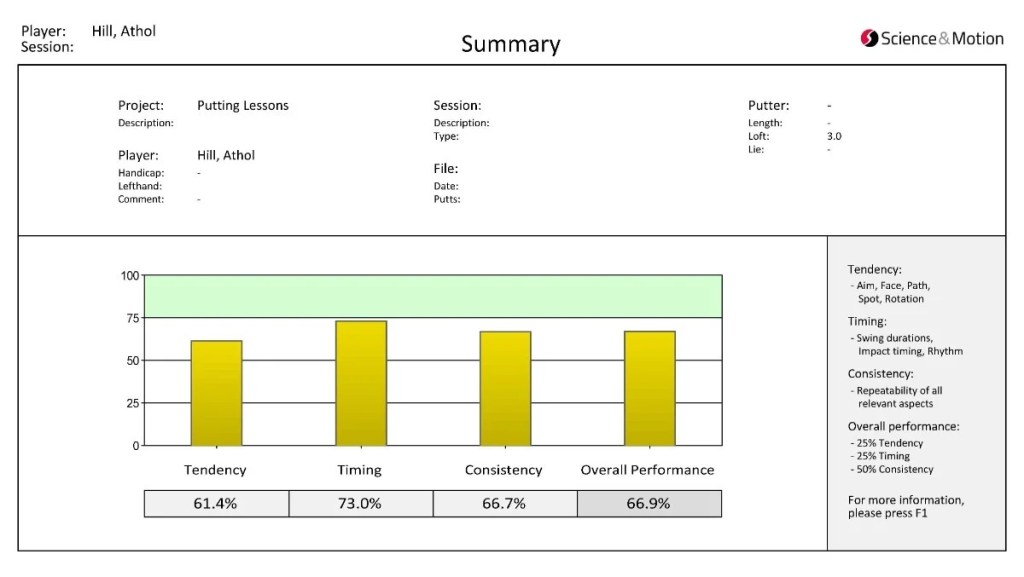
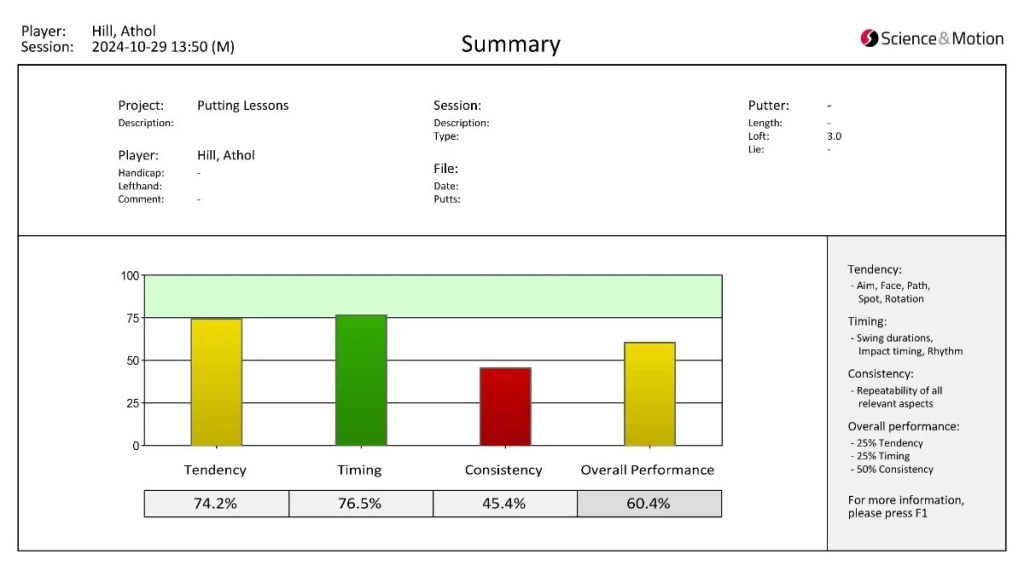
I didn’t see a massive difference between Accra and TPT. I just want people to realise that if you’re expecting big jumps in accuracy accuracy, or that the lack of torque on the shaft is going to produce miracles, you’re not looking in the right area.
When it comes to the numbers, the greatest way for me to explain the numbers from my personal perspective, is that it offers 1/20 more putts from 30 foot or longer, assuming you get the line right. That may not seem impressive at all, but it’s important to realise that the LAB DF3 is already good when it comes to numbers. As an example, 6 out of 12 from 20 foot without aiming properly isn’t too bad.
These test results reflect what I mentioned about 1/20 putts
10 feet
From 10 feet, 20 putts, average deviation and I also wanted to see how many I could sink before I missed one.
Average deviation from straight: Accra 0.18 degrees, Average deviation from straight with TPT 0.16
Putts in a row: 10 with TPT, 10 with Accra
Total putts: 16 with TPT, 16 with Accra
10 feet is a tie for me. Accra and TPT level. On paper, the TPT seems to be better, but it made no discernible difference to the outcomes.
20 foot
From 20 feet, 20 putts, average deviation, and I wanted to see how many I could sink in a row within 20 balls.
Average deviation from straight with Accra 0.25 degrees, Average deviation from straight with TPT 0.19
Putts in a row: 3 with TPT, 3 with Accra
Total putts: 8 with TPT, 9 with Accra
The above results are a little weird. My putting with the TPT was more consistent, but I sunk more from 20 feet with the Accra. I think the random nature of it will result in this.
30 foot
From 30 feet, 20 putts and I wanted to see how many I could sink
Average deviation from straight with Accra 0.35 degrees, Average deviation from straight with TPT 0.33
Putts in a row: 1 with TPT, 1 with Accra
Total putts: 4 with TPT, 3 with Accra
The above results make a little more sense.
On-Course (20 out of 20)
I like to start a review writing my review early and then update it, because it allows me to understand how my perceptions change. It’s interesting to see if you have to correct yourself. One week in, this review started something along the lines of: ”Some people are going to ask whether TPT is a miracle cure for bad putting. It isn’t. You’ll be putting badly with a more expensive putter.”
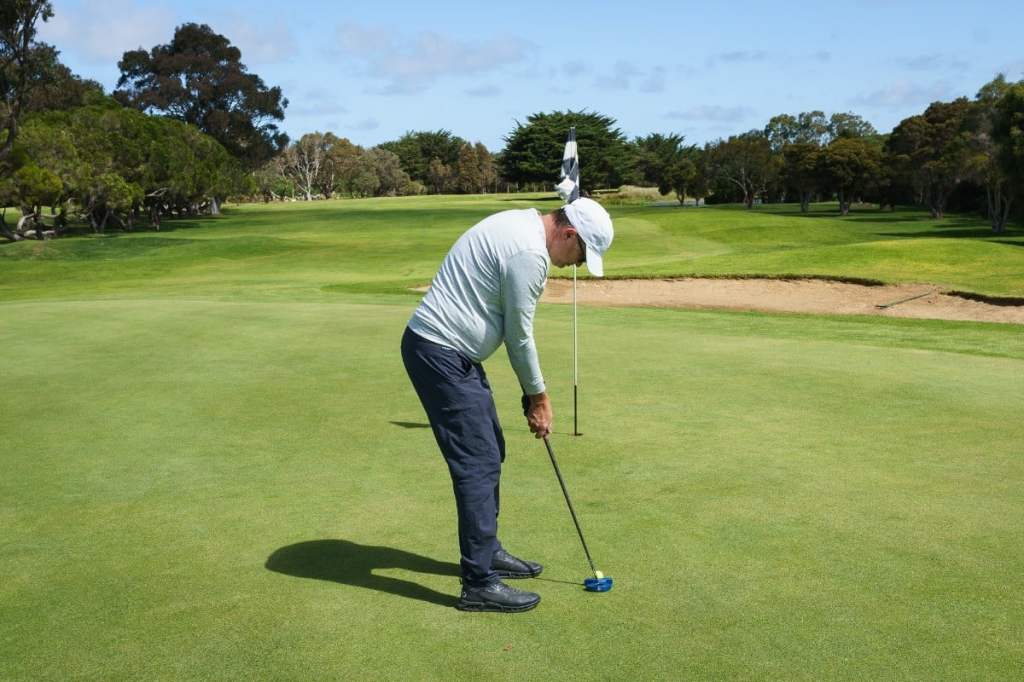
I’m loath to admit that I was actually wrong. The thing I underestimated is that bad putting isn’t always a technique issue. Sometimes it’s an adaptability issue. I underestimated the true impact of feel. I expected the TPT to be all about the performance improvements you get on paper in the Sam PuttLab with putter path and face angle but it’s not.
This is where it gets interesting, the reason why I gave it 20/20 and more importantly, why you can’t always look just at the numbers on a Sam Puttlab.
Put simply, the Sam PuttLab comparison didn’t translate to my scores on the golf course during competition. During the testing period, my competition scores were:
- 41 points
- 39 points
- 36 points
- 27 points (I was recovering from a virus with balance issues and blocked ears)
- 40 points
That’s 4/5 handicap or better scores in a row when you’re supposed to play to your handicap 8/20 rounds, and one week I was sick with a virus.

My handicap dropped from 8.2 to 6.9 in the space of 6 weeks while testing, while my irons and driving were probably worse. It would have dropped further by another point if both my two October 4BBB scores counted. 4BBB don’t count towards handicap in Australia unless you score on more than 14 of the 18 holes, and my partner was playing well so we alternated scores.
The 36 pointer was some of my worst iron playing, hitting only 4 greens in regulation, and I only 12 putts on the front 9 which is a first for me. It wasn’t my good chipping that saved me, it was my putting. The greens over the 6 week period were worse due to multiple coring activities to get through the thatching issue we have had. My playing partner who is a far better putter than I am was battling in the changing conditions.
When I went to a championship course in the last weekend of the test, my putting was off the charts, shifting to greens that were very fast, 12-13 on the stimp. One of my biggest issues with putting has always been adaptability. Forgiving putters have very little feel. Feel putters have very little forgiveness. The TPT with DF3 gives you both forgiveness and feel and that has translated to big improvements in my score.
The Good, the bad, the inbetween (18 out of 20)
I thought I’d use this area to cover a question and my answer based on personal experiences.
“Why don’t more people take the TPT on LAB?”. I didn’t buy TPT when I got my first LAB, so why not? There is the obvious thing, the cost, but cost wasn’t the reason for me.
I think TPT is a harder sell for first time LAB buyers because they are buying into a lie angle balance concept without knowing whether it’s going to work for them, or whether it’s actually true if you were one of the earlier adopters. In some cases it could also be a user trying something different like a broomstick for the first time and they don’t want to invest too heavily until they know the final path.
Once you’ve tried LAB, I think the choice of TPT becomes easier. You know how good LAB putters are and the advantages of lie angle balance over a face or toe balanced putter, so it’s just a question of whether you can afford it. If you fall into that camp, just get the TPT.
I do feel that LAB and TPT need to get a little more real comparative information out there so people can make educated choices on the shafts. This test is doing exactly that, but when you look around, there isn’t a lot of other information which really compares the TPT shafts to stock or Accra.
I think cost will be a big factor for some people, and a $400 shaft is on the high end of the scale, but I do feel that that it’s worth it, if you have the budget. If you don’t, as the numbers show, your putting won’t suffer too much, but the lack of feel may have a small impact on adaptability.
Play it or Trade it? (20 out of 20)
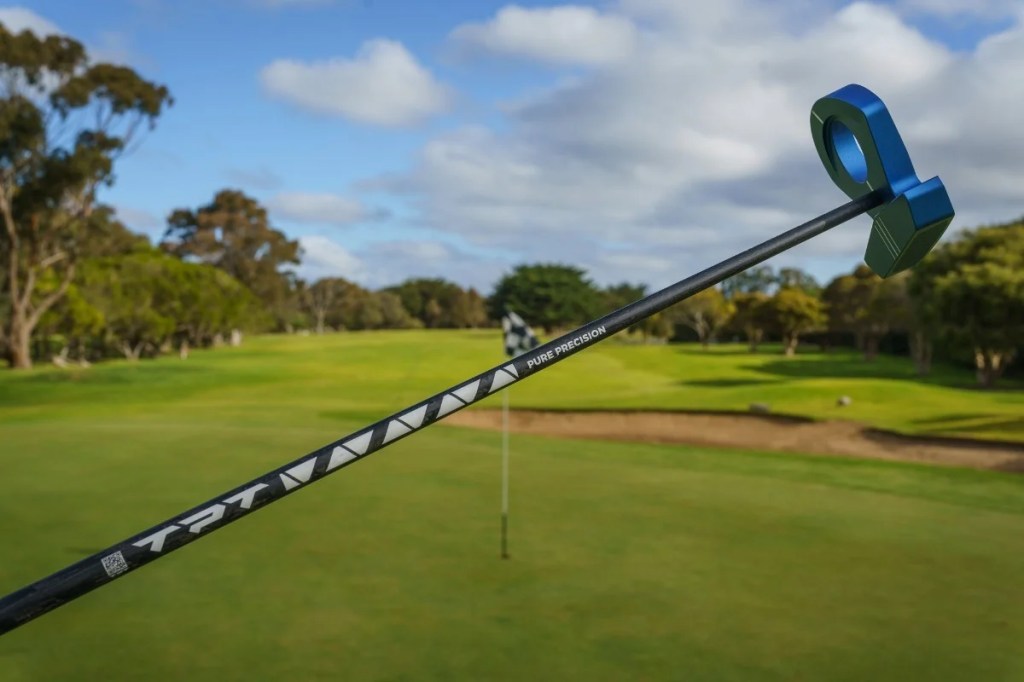
I love the feel of TPT so if feel was the only metric, it would no brainer. The feedback is amazing. The technical data isn’t that convincing, but it really depends on what data you look at. The Sam PuttLab data says there isn’t much of a difference and I shouldn’t bother. My own personal tests say there isn’t much of a difference, and given my error rate with my putting stroke and line, I’m just as likely to influence it with a bad putt.
But as I mentioned in the course section, the technical data doesn’t match my outcomes on the course. How often have you tried a putter and it feels amazing, only to get onto the course and find you’re 3 putting often. This is the opposite. The real data (scores) show a much bigger improvement and I point that to “feel” not ”torque”. I’m at my lowest handicap since I got back into golf, and the best competition scores since I got back into golf, if not ever in my life. I’m also having the least amount of average putts since I got back into golf.
Right now, I’d be insane to trade it. Until maybe the Oz is released, but even then I’ll add a disclaimer that if I buy an Oz, it’ll be with a TPT.
Conclusion
At the beginning of this review, or before I got my TPT shaft, I’ll admit I didn’t get TPT. I thought it was a $400 upgrade for more torque and accuracy. 6 weeks later, I get it. I get why the pros use them. I get why people who have them swear by them, and I also get why people think it’s an overkill, because the data doesn’t show the real benefits.
Sadly for my future wallet, the TPT is worth every dollar if you can afford it, I had a Mezz Max with a steel shaft that I kept in case I wanted to go back to a short putter. I sold it two weeks into the review. I think at that point I already knew if I was ever going to use a short putter, it would be a TPT upgrade.
TPT is no longer confined to my putter either. The outcomes of the test were so compelling for me that I spent a sizeable amount upgrading my driver to a TPT shaft, because if that’s what TPT could do with a putter, I wanted to understand what they could do with a driver. Whilst I’m in the early stages of that experiment, it’s looking very promising.

I’ve had positives and negatives come out of the test. I’ve covered the positives through this review. The negatives have been a reality check on my putting stroke and I have some work to do. I’m sinking more, but some work on my putting stroke will get rid of some of the outliers I’m experiencing, the odd push or pull that’s occurring so that’s my next step.


 My Golf Review
Leave a comment